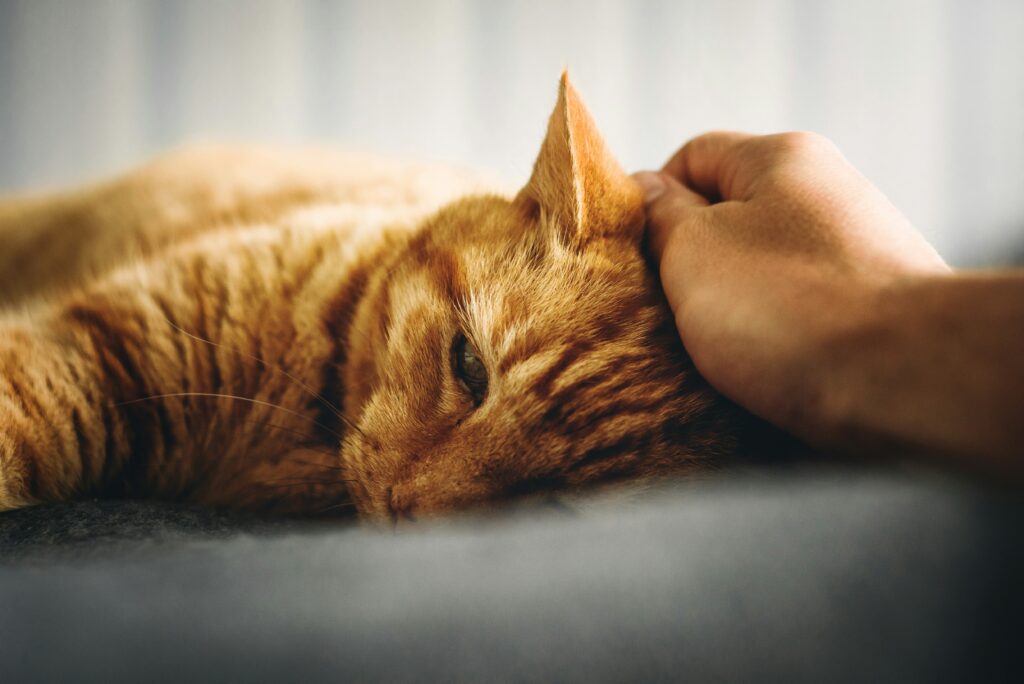
The Grief of Losing a Pet Is Real: What Nobody Tells You About Pet Loss in Singapore
If you have lost a pet and found the grief harder, longer, or lonelier than you expected, this article is for you. Or if you have not lost your pet yet but can feel the weight of that day already beginning to gather, it is for you too.
There are things in a home that do not change the day after a loss.
The bowl is still in the same corner. The bed is still by the window. The leash still hangs by the door. And for a while, the body still moves toward these things out of habit, before memory catches up and the absence lands again, freshly, as though for the first time.
If you have lost a pet and found the grief harder, longer, or lonelier than you expected, this article is for you. Or if you have not lost your pet yet but can feel the weight of that day already beginning to gather, it is for you too.
However, if what you are navigating feels more like the ongoing stress of caregiving than grief itself, you might find our piece on the hidden stress of pet caregiving more fitting for where you are right now.
The grief that arrives before the loss
Not all grief waits for death to begin.
For owners of pets who are ageing, unwell, or living with a condition that will only continue to deteriorate, grief can begin long before the loss itself. It arrives quietly, in the moments when the pet cannot do something they used to do easily. In the way a walk gets shorter. In the extra medication, the specialist visits, the careful monitoring of small changes. In the knowledge, held at the back of the mind even on good days, that time with them is finite.
This is known clinically as anticipatory grief, mourning that begins before the loss arrives. It has no clear start and no clear end. It lives alongside daily life, colouring even the good moments with a kind of tenderness that is inseparable from sadness. The owner is not being morbid. They are loving their pet with the full awareness of what loving something mortal means.
But anticipatory grief does not only belong to owners whose pets are currently ill. Any owner who has loved a pet deeply may recognise the feeling. Even in a quiet and ordinary moment, when the thought "one day, my pet will not be here" arrives without warning, that sudden, quiet ache of awareness of impermanence is its own form of grief.
Anticipatory grief is rarely named for what it is. Most people around the owner do not see it as grief at all, because the pet is still there. But the weight of it is real, and carrying it quietly over months or years takes something out of a person that rest alone cannot restore.
The grief that comes after
When loss arrives, it takes different shapes for different people.
For some, it is sudden, like an unexpected diagnosis, a rapid decline, a loss that came before there was time to prepare. The grief that follows might feel like a video that often loops back through the moments before the passing, searching for what was missed, what could have been different, or what might have changed the outcome. The mind replays, trying to find something it can resolve.
For others, the loss comes after a long period of illness or decline. The shape of this grief might be layered with relief that the pet is no longer suffering, and then sadness because of the absence coupled with possible guilt about the relief. The feelings are real and make complete sense. Loving your pet through a long illness and feeling relief when that suffering ends is not a betrayal of the love. Perhaps it is part of what love looks like in the hardest moments.
For those who faced the decision of letting a pet go, the grief can carry a particular weight especially because the decision was theirs to make. Most owners who reach that point make the most loving choice available to them with what they know and what their pet needs. But that does not make the weight of it disappear.
And then there is the everyday grief, the kind that arrives not in dramatic moments but in small ones. The quiet of the house, the changes in routines, the space on the sofa that stays empty. The realisation, arriving again and again, that the pet is simply no longer there.
When others do not quite understand
In Singapore, there is growing awareness that pet loss is real. People may offer condolences. A colleague might acknowledge the absence. There is more understanding than there once was.
But understanding and sustained support are not the same thing.
What tends to happen could look like condolences being offered once, and then the world moving on. There is an unspoken expectation that grief over a pet should be manageable, proportionate to the loss, resolved within a reasonable time. When the grief persists beyond that window, coupled with thinning patience and understanding from others, the owner begins to feel not just sad but as though grieving this much, this long, means something is wrong with them.
Underneath this is an assumption that pets are replaceable, that another animal could fill the space. But for an owner who loved their pet as family, that suggestion misses something fundamental. That bond was real and is not replaceable. And the grief they are experiencing is proportionate to that bond.
Clinically this is understood through the concept of disenfranchised grief. While the loss and the grief are real, the social recognition does not always match the weight of what was lost.
What begins to shift with support
The first thing that tends to change when a grieving pet owner finds support is not the grief itself. It is the experience of carrying it.
In the therapeutic space, there is understanding, a non-judgmental presence, and the experience of being held in the grief rather than an expected timeline for that grief.
That experience of finally being heard, without explanation required, without the loss being measured against other losses, tends to be where something begins to loosen.
A person who came in still half-apologising for how much they were feeling sometimes finds, in that space, that no apology was ever needed. That the grief made complete sense given what the relationship meant. That loving a pet that deeply, and grieving that deeply, is not too much. It is simply what love costs when it is real.
When you are ready
Whether the grief is fresh or has been sitting with you longer than you expected, you will be met with compassion and not judgement at The Calming Ark. When you feel ready, we would be glad to connect with you.
Ready to take the first step?
You do not need to have everything figured out before reaching out. Send us a message and we will help you find the right support.
If you are having thoughts of harming yourself or ending your life, please know that you do not have to face this alone. Reach out to one of the following 24-hour crisis lines.
1767 — Samaritans of Singapore (SOS)
6389 2222 — Institute of Mental Health (IMH)
- 1 Cordaro, M. (2012). Pet loss and disenfranchised grief: Implications for mental health counseling practice. Journal of Mental Health Counseling, 34(4), 283–294. https://doi.org/10.17744/mehc.34.4.41q0248450t98072
- 2 Packman, W., Carmack, B. J., & Ronen, R. (2012). Therapeutic implications of continuing bonds expressions following the death of a pet. OMEGA: Journal of Death and Dying, 64(4), 335–356. https://doi.org/10.2190/OM.64.4.d
- 3 Feature image: Alexander Andrews / Unsplash